
Global financial markets have been pushed into a state of severe turbulence as investors face a chaotic mix of a fading artificial intelligence rally, blockbuster economic data, and a violent flare-up of geopolitical hostilities in the Middle East. The sudden convergence of these risks has triggered massive sell-offs across major international indexes, bringing a definitive end to a nine-week equity bull market.
While a late-day diplomatic de-escalation helped Wall Street recover some initial losses, underlying anxiety regarding bloated tech valuations and global energy security remains exceptionally high.
1. The AI Rally Hits a Wall
For the past several months, technology and semiconductor companies have been the primary engines of global stock market growth. However, investor complacency received a harsh reality check after custom chip designer Broadcom reported a disappointing revenue outlook, missing lofty market estimates.
The weak forecast immediately ignited simmering fears that the massive capital expenditure pouring into AI infrastructure may not yield the immediate commercial returns Wall Street had priced in.
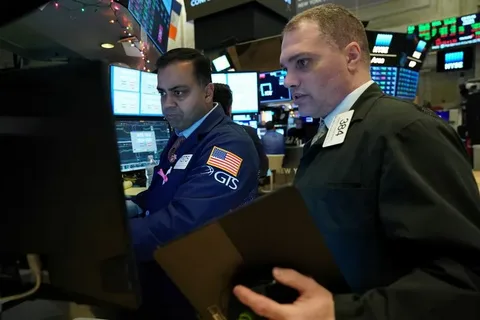
The cascading effect across the tech sector was swift and brutal:
- The Nasdaq Composite plunged 4.2% in a single session, marking its sharpest single-day decline in months.
- The Philadelphia Semiconductor Index plummeted a staggering 10%, experiencing its worst trading day since the early weeks of the 2020 pandemic.
- European Chip Giants bore heavy collateral damage, with industry leaders ASML shedding 3.2% and Besi (BE Semiconductor Industries) sliding 4.5%.
Market strategists note that while the structural AI narrative is far from over, investors are becoming significantly more selective, demanding clearer proof of monetization and capex discipline rather than relying on pure enthusiasm.
2. Global Markets Shake as Circuit Breakers Trigger
The shockwave from Wall Street’s tech rout slammed into Asian markets with intense force on Monday morning, forcing regulatory interventions to halt panicked selling.
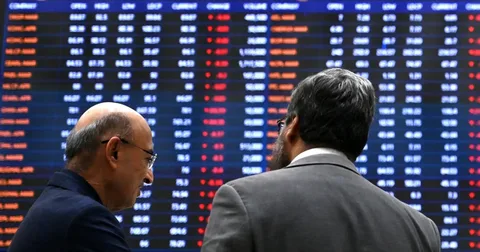
South Korea’s KOSPI index, which had held the title of the world’s best-performing major index this year, collapsed by as much as 8.8% in early trade. The dramatic freefall triggered automatic market circuit breakers for the third time this year before closing down roughly 8%. Tech heavyweights Samsung Electronics and SK Hynix were the primary drivers behind the index’s sharp retreat.
Elsewhere in the region, Japan’s Nikkei index dropped close to 5%, while Singapore’s Straits Times Index (STI) slipped 1.7%, tracking a broad 3.4% decline across MSCI’s comprehensive Asian equity gauge.
3. Rate Hike Specter Revived by Hot Jobs Data
Compounding the tech sell-off was a blockbuster US nonfarm payrolls report that completely shattered expectations. The US economy added a hot 172,000 jobs, far exceeding estimates and painting a picture of an overheating labor market.
The economic resilience has completely inverted monetary policy expectations. Instead of anticipating imminent interest rate cuts, bond markets responded by sending the 10-year US Treasury yield past 4.50%. Traders are now aggressively pricing in a greater than 70% probability that the Federal Reserve will hold interest rates higher for longer, with economists warning that the central bank’s next tactical move could potentially be a rate hike later this year to tame sticky inflation.
4. Middle East Escalation Jolt Energy Markets
Geopolitical risk added immense fuel to the market fire over the weekend as a fragile truce completely ruptured. Iran and Israel exchanged direct military strikes, involving ballistic missile barrages and retaliatory airstrikes on radar and petrochemical complexes.
The immediate threat to the strategic Strait of Hormuz—a vital shipping chokepoint responsible for a fifth of the world’s daily oil and gas supply—sent energy markets into a tailspin. Brent crude oil surged as much as 5.0%, hitting a high of $97.15 a barrel.
Although oil prices pulled back slightly to around $94.56 after Tehran later announced an end to its immediate military operations, the brief conflict has left global supply chains highly vulnerable. The threat of a prolonged conflict, combined with sticky inflation and shifting tech valuations, means volatility is set to remain the dominant theme on trading floors for the foreseeable future.