

The Middle East is breathing a highly volatile sigh of relief. Following a chaotic 24 hours of direct military exchanges that threatened to plunge the region into a full-scale war, Iran and Israel announced a temporary halt to active strikes on Monday. The swift, unexpected pause came directly after an urgent intervention from US President Donald Trump, who publicly demanded that both sides immediately “stop ‘shooting'” and return to the negotiating table.
While the immediate missile sirens have fallen quiet over Tel Aviv and Tehran, the diplomatic and military rhetoric remains dangerously hostile. The brief flare-up has pushed the fragile April 8 regional ceasefire to its absolute absolute breaking point, showing how easily the conflict can spiral out of control.
24 Hours of Chaos: How the Truce Ruptured
The sudden breakdown of the truce began with a rapid, violent chain reaction across multiple fronts, completely bypassing regional security fences.
- The Catalyst in Lebanon: The escalation kicked off on Sunday morning when Hezbollah fired a salvo of rockets into northern Israel. Israel immediately retaliated by launching heavy airstrikes against a militant command center in Beirut’s southern Dahiyeh district, killing two people.
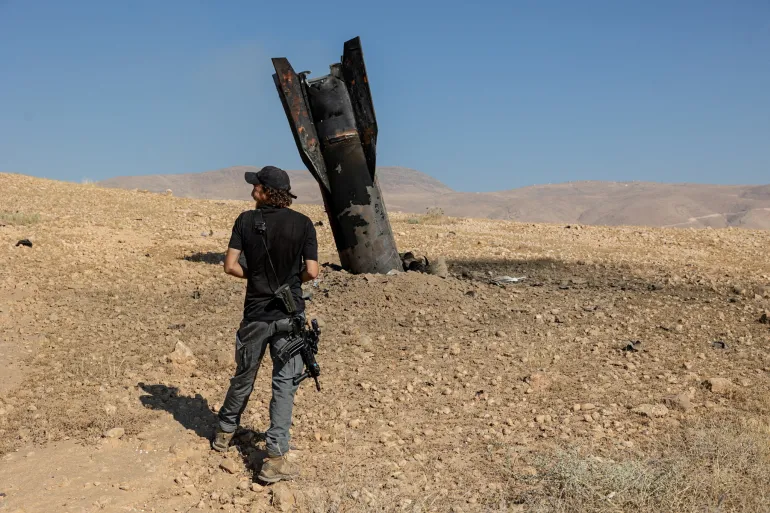
- The Iranian Missile Salvo: Declaring that Israel had “crossed all red lines” by striking Beirut, Iran’s Islamic Revolutionary Guard Corps (IRGC) bypassed its proxies and launched close to 30 ballistic missiles directly at Israel, targeting three primary military airbases.
- The Israeli Response: While Israeli air defenses successfully intercepted the incoming threats, Prime Minister Benjamin Netanyahu launched an immediate counter-strike. Dozens of Israeli warplanes hit back directly inside Iran, hammering surface-to-surface missile launch sites, radar grids, and the Mahshahr petrochemical complex—a critical industrial hub used to fund Iran’s missile development.
The dramatic exchange marked the most severe, direct confrontation between the two bitter rivals since the regional war began, forcing neighboring countries like Iraq, Syria, and Iran to temporarily shut down their entire sovereign airspaces.
Ceasefire Restored, But Heavy Conditions Apply
The current halt in fighting is far from a permanent peace treaty. Instead, both nations have accepted the temporary pause while framing it as a positions of strategic strength, keeping their fingers firmly on the trigger.
In a televised address, Prime Minister Netanyahu acknowledged the halt in active operations, stating that Israel had successfully “hit the terror regime in Tehran.” However, he issued a fierce, uncompromising warning to the Islamic Republic:
Netanyahu also emphasized that Israel would continue its military operations against Hezbollah in southern Lebanon, asserting that the safety of Israel’s northern border is non-negotiable.
Tehran’s military command issued an equally hardline counter-ultimatum. While confirming their offensive operations are currently paused following Trump’s appeal, the IRGC warned that any ongoing Israeli operations in Lebanon would instantly invalidate the truce. “Should acts of aggression and hostility continue, including in southern Lebanon, much more severe and crushing measures than before will follow,” the Iranian state media broadcasted.
The Strategic Battle for the Strait of Hormuz
Compounding the crisis is a parallel standoff involving the United States in the Gulf waterways. President Trump clarified that while he wants the immediate missile exchanges to stop, the US naval blockade around Iranian energy ports will continue until a comprehensive, binding “final deal” is fully signed by Tehran.
The economic pressure has driven the IRGC Navy to take aggressive countermeasures, explicitly warning international mariners against complying with “illegal transit rules” enforced by the US Fifth Fleet. Simultaneously, Yemen’s Houthi rebels joined the fray by launching a ballistic missile toward central Israel on Monday, while vowing to completely disrupt commercial shipping in the Red Sea.
With the international community scrambling to sustain the Pakistan-mediated peace talks, the region remains trapped in an agonizing state of suspense. The direct weapons exchange has shown that the line between a managed ceasefire and absolute regional devastation has never been thinner.