
The expanding economic shrapnel of the US-Iran war is severely wounding the international financial system. In its highly anticipated semi-annual Global Economic Prospects report, the World Bank has officially downgraded its baseline global economic growth forecast for the current calendar year to a stagnant 2.5%.
The staggering contraction marks the weakest pace of global economic expansion recorded since the COVID-19 pandemic brought the world to a standstill in 2020. Driven by paralyzing shipping blockades, a violent return of commodity-driven inflation, and a cascading cost-of-living crisis, the Washington-based lender has slashed the individual growth projections for two-thirds of all nations on Earth.
1. The Strait of Hormuz Chokehold and the Energy Spike
The primary economic engine dragging down global performance is the prolonged military disruption across the Strait of Hormuz—the world’s most critical maritime oil transit artery.
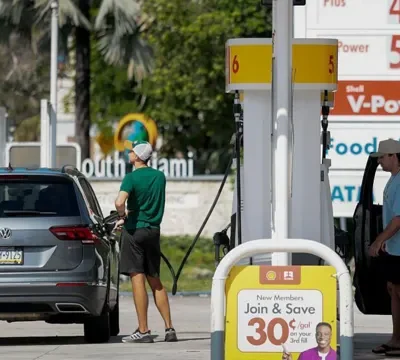
The ongoing conflict has effectively paralyzed traditional supply lines, forcing shipping conglomerates to take circuitous, expensive alternative routes. As a direct result, the World Bank’s baseline models are now forced to operate under the assumption that Brent crude oil will average a punishing $94 per barrel—marking a massive 36% spike compared to last year’s average.
Even worse, fertilizer prices have skyrocketed by 22%, triggering immediate warning bells at the United Nations regarding an impending, artificial global food security emergency.
2. A Lost Decade for Developing Nations
While advanced economies are feeling the pinch via higher fuel costs, emerging markets and developing economies (EMDEs) are bearing the absolute brunt of the macroeconomic wreckage.
Excluding the isolated cushions of India and China, the World Bank warns that the aggregate growth rate for developing countries has collapsed to a post-pandemic nadir of 3.6%.
The bank’s chief economist, Indermit Gill, delivered a sobering assessment of the situation, cautioning that “barring an absolute miracle,” the 2020s are rapidly transforming into a lost decade for global development. The systemic wealth gap separating impoverished, highly indebted nations from the world’s most prosperous economies is actively widening for the first time in a generation.
3. Microscopic View: Regional Damage and Resilience
The downward revisions have manifested unevenly across the global stage, with energy-dependent and conflict-adjacent territories absorbing catastrophic hits.
- The Middle East and South Asia: The combined geographic block encompassing the Middle East, North Africa, Afghanistan, and Pakistan absorbed the most brutal correction, with the bank slashing its regional growth outlook by 2.7 percentage points down to a dismal 1.6%.
- The Gulf Cooperation Council (GCC): Major oil-exporting powerhouses are facing severe domestic deceleration due to localized export restrictions. The United Arab Emirates (UAE) saw its projected GDP growth for the year chopped clean in half—tumbling from an initial 5% projection down to just 2.4%.
- The Standout Exceptions: Bucking the global downward trend, India remains the fastest-growing major economy in the world, maintaining a highly resilient GDP expansion rate of 6.6%, followed by China at a moderated 4.2% and the United States at 2.2%. The Eurozone remains the weakest link among developed blocs, flatlining at a near-recessionary 0.8%.
4. The Absolute Nightmare Scenario: A Drop to 1.3%
To combat this unexpected wave of war-induced inflation, which has pushed the bank’s global inflation projection up to a sticky 4%, central banks worldwide are trapped into keeping interest rates elevated for a prolonged duration.
World Bank Deputy Chief Economist Ayhan Kose warned that the current 2.5% baseline is highly fragile. In an intermediate downside model where energy supply disruptions persist past July and send oil prices averaging $115 per barrel, global growth will automatically wither to 2.1%.
In the ultimate nightmare scenario—where severe energy shocks trigger systemic panic across global debt and banking markets—investor confidence could disintegrate entirely, collapsing global economic growth to a catastrophic 1.3%. To mitigate the immediate fallout, the World Bank has announced it is unlocking $100 billion in emergency liquidity over the next 15 months to help the most vulnerable, low-income nations survive the compounding shockwave.