
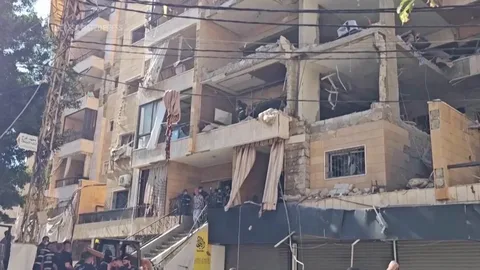
The fragile peace in Lebanon is on the verge of complete collapse. Defying a direct request from Washington, Israeli warplanes launched sudden airstrikes on Beirut’s southern suburbs, just days after a newly renewed, US-brokered ceasefire agreement went into effect. The heavy bombardment has shattered the temporary calm and triggered intense fears of a renewed, full-scale regional war.
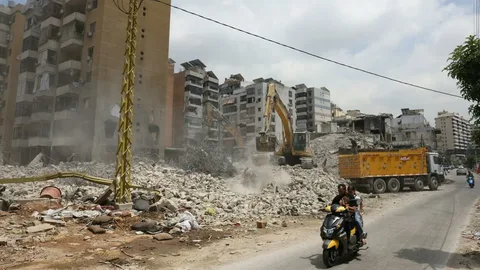
The strikes targeted the sprawling, densely populated Dahieh district—a known stronghold of the militant group Hezbollah. According to preliminary reports from Lebanon’s state-run national news agency, the unexpected attack struck a residential building, leaving two people dead and 11 others wounded.
Retaliation and Ceasefire Violations
The Israeli military and Prime Minister Benjamin Netanyahu’s office quickly released a statement defending the operation, asserting that the airstrikes were a direct response to Hezbollah firing rockets and drones toward northern Israel earlier in the week. Israel claimed the operation specifically targeted active Hezbollah command centers and operational headquarters.
The escalation highlights the fatal flaw of the recent Washington-led peace talks:
- The Sovereign Deal: The renewed ceasefire was officially signed between the sovereign governments of Israel and Lebanon, with both states asserting that non-state actors should not hold Lebanon’s future hostage.
- The Hezbollah Rejection: Because Hezbollah was not a direct party to the talks, the group explicitly rejected key security provisions of the US-brokered deal, refusing to halt its cross-border operations unless a broader deal is reached.
Iran Threatens “Painful” Retaliation
The strikes on the Lebanese capital have sent diplomatic shockwaves across the Middle East, directly threatening parallel, highly sensitive peace talks currently being mediated by Pakistan between the United States and Iran.
Tehran had previously drawn a strict red line, warning that any military assault on Beirut proper would completely invalidate ongoing diplomacy. Following the strikes, Iranian lawmaker Ebrahim Rezaei promised a “decisive and painful response to the Zionist regime,” while Iran’s powerful parliament speaker, Mohammad Bagher Qalibaf, issued a direct threat to American forces:
A Regional War of Attrition
While a senior US official noted that Washington was “not entirely surprised” by the development, the White House has withheld formal comment as diplomats scramble to salvage the truce. Meanwhile, the reality on the ground remains terrifying for civilians. The Israeli Defense Forces (IDF) have simultaneously issued mass evacuation orders for major southern Lebanese towns, and daily artillery exchanges continue to displace thousands along the border.
With Prime Minister Netanyahu facing immense domestic political pressure and looming elections later this year, Israel appears determined to push ahead with its offensive until it considers the northern border completely secure. However, as Hezbollah pulls Iran closer into the fray, the US-brokered ceasefire looks less like a bridge to permanent peace and more like a brief pause in an ever-expanding conflict.