

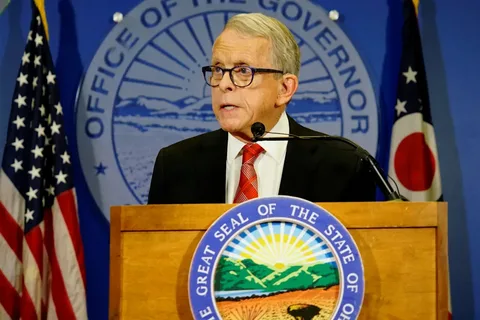
In a stunning political turnaround, Ohio’s Republican Governor Mike DeWine has publicly called on state lawmakers to abolish the death penalty, confirming a total change of heart on capital punishment. The 79-year-old governor declared during a press conference that he no longer believes the ultimate penalty serves as a viable deterrent to violent crime.
The announcement marks a deeply symbolic reversal for DeWine. Exactly 45 years ago, as a young state legislator, he co-sponsored the 1981 statute that reinstated capital punishment in Ohio. Now, entering the final months of his second gubernatorial term, DeWine is leveraging his executive platform to completely dismantle the system he helped construct.
“The Moral Justification No Longer Exists”
DeWine outlined his philosophical shift with direct, unvarnished language, explaining that a state only possesses the moral authority to take a life if the act actively prevents future atrocities:
Inside Ohio’s Paralyzed Capital Punishment System
To justify his legislative push, Governor DeWine brandished an array of state data, charts, and legal records demonstrating that Ohio’s execution architecture has become structurally unworkable:
- Extreme Legal Gridlock: Condemned inmates face an average wait time of more than 22 years on death row as complex constitutional and legal appeals play out.
- Diminishing Capital Sentences: Ohio courts are rendering fewer death sentences than at any point in modern state history as juries opt for life without parole.
- Natural Attrition: Due to multi-decade delays, inmates on death row are now statistically more likely to die of natural causes or suicide than by an official state execution warrant.
The Path Forward and Political Resistance
While the executive branch is pushing for total abolition, DeWine faces a steep uphill battle within his own party. Hardline Republicans, including House Speaker Matt Huffman and Attorney General Dave Yost, remain staunch proponents of capital punishment and are expected to aggressively block any repeal bills.
In response, DeWine suggested that if the General Assembly refuses to act, the issue should be placed directly before Ohio voters on a statewide ballot.
Ohio has not executed an inmate since July 2018. Since taking office in 2019, DeWine has consistently issued reprieves, citing the refusal of pharmaceutical companies to supply lethal injection chemicals. With his term officially concluding at the end of 2026, DeWine confirmed that the state’s unofficial execution moratorium will remain absolute for the remainder of his tenure, arguing that the system takes an unnecessary mental health toll on state employees and inflicts prolonged pain on victims’ families.