

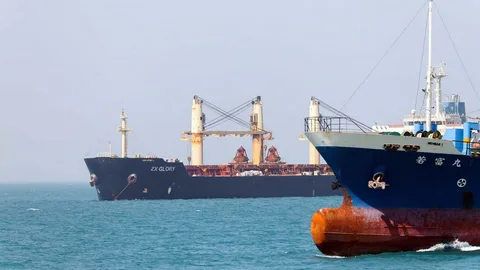
A profound structural shift is rewriting the global economic outlook. Following the blockbuster announcement of a U.S.-Iran peace framework, the severe geopolitical risk premium that has choked the global economy for more than 100 days is finally beginning to dissolve.
With U.S. President Donald Trump declaring an end to the naval blockade and authorizing the “toll-free opening” of the strategic Strait of Hormuz, global commodity desks have experienced a massive wave of relief.
Because the Strait of Hormuz serves as the maritime transit chokepoint for roughly one-fifth of the world’s total oil and liquefied natural gas (LNG) supplies, the diplomatic breakthrough has directly triggered a dramatic unwinding of energy and agriculture costs.
1. The Crude Awakening: Oil Plummets to a Three-Month Low
The immediate impact of the peace accord manifested as an absolute rout in the energy futures markets. Having peaked as high as $120 to $126 per barrel during the height of the active maritime hostilities, oil benchmarks cratered immediately following confirmation of the deal:
- Brent Crude: The international standard plummeted by over 5%, tumbling down to $82.61 per barrel—marking its lowest individual trading level since the early days of the war in March.
- West Texas Intermediate (WTI): The domestic U.S. benchmark followed a mirrored trajectory, sliding roughly 5% to settle at $80.75 per barrel.
- Wholesale Natural Gas: European and American gas futures tracking industrial heating and power generation automatically sank by nearly 6%.
Despite the sharp downward trajectory, energy analysts at Pepperstone Group urge caution, noting that oil is unlikely to return to its pre-war base of $73 anytime soon. - The physical process of clearing naval mines from the shipping lanes is projected to take up to seven weeks during the 60-day nuclear phaseout negotiation window. Furthermore, global commercial entities are rushing to buy up excess supplies to replenish heavily depleted strategic emergency crude stockpiles, which will structurally keep oil floored between $80 and $90 for the remainder of the year.
Despite the sharp downward trajectory, energy analysts at Pepperstone Group urge caution, noting that oil is unlikely to return to its pre-war base of $73 anytime soon.
The physical process of clearing naval mines from the shipping lanes is projected to take up to seven weeks during the 60-day nuclear phaseout negotiation window. Furthermore, global commercial entities are rushing to buy up excess supplies to replenish heavily depleted strategic emergency crude stockpiles, which will structurally keep oil floored between $80 and $90 for the remainder of the year.
2. The Agricultural Domino Effect: Why Food Follows Fuel
While the direct relief at the gas pump is easily visible, the secondary, highly critical consequence of the U.S.-Iran deal is the deflation of the global cost of food. Modern agricultural supply chains are fundamentally tethered to the price of oil and gas; when energy spikes, a hidden food crisis inevitably follows.
The Fertilizer Connection
Commercial agriculture relies entirely on chemical fertilizers. The production of ammonia-based nitrogen fertilizers requires vast, highly intensive quantities of natural gas.
During the maritime blockade, skyrocketing wholesale gas prices forced fertilizer manufacturing plants across Europe and Asia to halt production, driving up farming overhead. The cooling of energy markets instantly reduces input costs for global food producers.
The Logistics Reversal
During the three-month blockade, shipping conglomerates were forced to abandon the Persian Gulf or pay astronomical war-risk insurance premiums to navigate adjacent waters.
Many grain and crop transport vessels were forced to take circuitous, expensive alternative routes. The stabilization of shipping lanes drastically lowers international marine freight costs, allowing raw agricultural commodities to move across borders efficiently.
Terrestrial Farming Overhead
From the diesel fuel required to run heavy harvest tractors to the electrical energy consumed by automated grain dryers and processing plants, food production is intensely energy-dependent. Lower crude oil prices directly reduce the baseline operational expenses of local agricultural hubs, mitigating the need for suppliers to pass compounding costs down to retail grocery stores.
3. Mitigating the Threat of a Global Food Crisis
Prior to the weekend breakthrough, International Monetary Fund (IMF) Managing Director Kristalina Georgieva had issued a stark warning that prolonged energy blockades were actively driving up core food costs, threatening an artificial food security emergency across highly vulnerable, low-income nations.
While the International Monetary Fund emphasizes that the consumer-facing retail market will take several months to fully absorb these wholesale reductions, the policy outlook has shifted completely:
| Economic Metric | Wartime Trajectory | Post-Deal Forecast |
| Global Headline Inflation | Accelerated to a 3-year high of 4.2% in May. | Projected to steadily cool down toward central bank targets. |
| Fertilizer Prices | Exploded by 22% due to regional gas shortages. | Expected to correct downward as production facilities normalize. |
| Central Bank Interest Rates | Under severe pressure to hike further to curb sticky inflation. | Expected to remain on hold, alleviating borrowing pressure on small businesses. |
By successfully averting the ultimate nightmare scenario of a prolonged total blockade—which prominent Wall Street institutions warned could have sent crude soaring past $150 a barrel and triggered systemic emerging market debt collapses—the U.S.-Iran framework agreement has effectively pulled the global food supply chain back from the edge of a catastrophic inflationary spiral.