
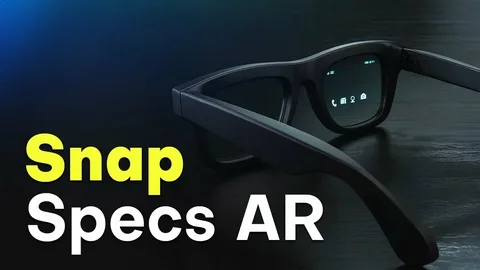
The era of true spatial computing has officially arrived on your face, but it is going to cost you a small fortune. At the Augmented World Expo (AWE) in California, Snap CEO Evan Spiegel finally pulled back the curtain on the company’s ultimate hardware gamble: Specs, a pair of fully standalone augmented reality (AR) glasses priced at a staggering $2,195.
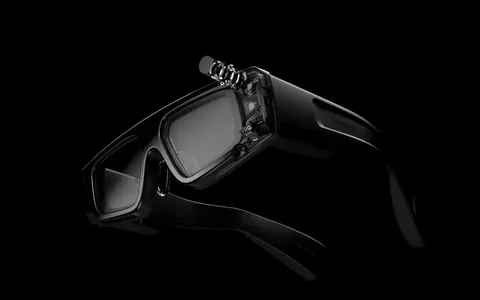
Moving entirely past the old days of basic camera-equipped sunglasses, the newly debuted Specs are independent spatial computers that require absolutely no phone tethering, external wiring, or processing pucks. While Snap has successfully managed to beat tech titans like Meta, Apple, and Google to the punch by launching a true consumer-facing AR device, the premium price tag has left everyday Snapchat users experiencing severe sticker shock.
1. Under the Hood: Cutting-Edge Spatial Architecture
To achieve a completely wireless, self-contained form factor, Snap’s engineering teams had to design an entirely unique dual-chip processing ecosystem.
Built utilizing a durable Swiss TR90 polymer chassis, the internal computing frame divides its massive operational workload across two dedicated Qualcomm Snapdragon processors:
By separating raw visual tracking from heavy application processing, Specs achieve a remarkable 7-millisecond motion-to-photon latency. This ultra-fast processing capability ensures that digital holograms and virtual interfaces remain perfectly anchored to physical surfaces in the real world, drastically reducing the traditional motion sickness that plagues older head-mounted displays.
2. Display Enhancements and the Battery Dilemma
The visual experience of Specs represents a massive technological leap over previous developer-only prototypes. The glasses utilize a proprietary liquid crystal on silicon (LCoS) display system delivering a 51-degree diagonal field of view and over 16 million colors.
To help put that structural scale into a real-world perspective, Snap’s display engineering team provided a clear structural breakdown:
| Viewing Distance | Virtual Screen Equivalent | Primary Use Case |
| Desktop Proximity | 24-inch Monitor | Private productivity, floating web tabs, and document reading. |
| 10 Feet Away | 115-inch Home Cinema | Immersive video playback, gaming, and 3D entertainment spatial layout. |
Furthermore, the hardware integrates electrochromic lenses that can transition from crystal clear to dark sunglasses tint in just 10 seconds, allowing the device to work seamlessly both indoors and outdoors.
However, compact spatial hardware demands severe power compromises. Specs only offer 4 hours of active, mixed-use battery life on a single charge. While that is a massive improvement over older hardware, it falls significantly short of all-day usage, forcing users to rely heavily on the included protective charging case to unlock an additional 20 hours of total mobile backup power.
3. The AR Arms Race: Under-Cutting Apple while Gapping Meta
By pricing Specs at $2,195—backed by an immediate $200 refundable preorder deposit for a Fall delivery window—Snap is positioning itself directly in the volatile center of a rapidly consolidating hardware ecosystem.
Independent market analytics groups, including International Data Corporation (IDC), note that this premium tier strategy introduces high operational risks. While Snap successfully undercuts Apple’s bulky $3,499 Vision Pro headset by roughly $1,300, the entry point alienates Snapchat’s core demographic of younger, Gen-Z consumers.
Conversely, Meta has dominated the low-end volume market with its affordable Ray-Ban smart glasses, but those devices lack true 3D stereoscopic waveguides, making Snap’s new product a significantly more capable, futuristic computer.
4. Conspicuous Omissions and Sovereign Developer Risk
Despite the high-profile launch, tech enthusiasts have quickly called out Snap for keeping several critical technical metrics completely shrouded in mystery. The official launch documentation conspicuously omitted any mention of screen resolution, nit brightness levels, RAM capacity, or camera sensor specifications.
Furthermore, the long-term success of the ecosystem rests entirely on third-party creators. While Snap has rolled out a massive Snap OS software update featuring advanced AI voice assistance, developers must rapidly build out high-utility tools to justify the astronomical price tag.
Preorders are currently active for consumers across the United States, United Kingdom, and France, but until everyday users can find a compelling, daily reason to swap their regular eyewear for a 132-gram computing rig, Specs will remain a magnificent, highly expensive playground for early adopters.