
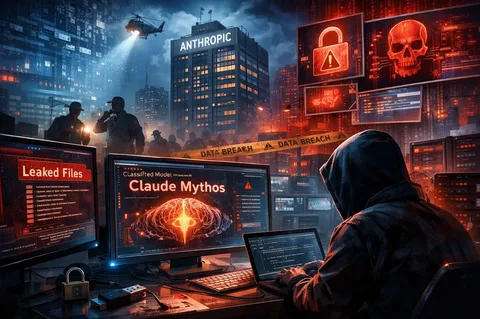
A fierce rebellion is rocking the technology sector. A coalition of dozens of prominent cybersecurity veterans, Chief Information Security Officers (CISOs), and top tech industry insiders have issued a blistering open letter to the White House, condemning the U.S. government’s emergency export control directive against Anthropic as a “dangerous” move that actively severely weakens American cyber defense.
The unprecedented regulatory showdown erupted after the Trump administration ordered the artificial intelligence safety startup to immediately block all foreign nationals—including Anthropic’s own overseas employees—from accessing its newly deployed, frontier Claude Fable 5 and Claude Mythos 5 models. Faced with the logistical impossibility of filtering users by nationality in real time, Anthropic was forced to abruptly disable both models for all customers worldwide.
1. The Pretext: A Narrow “Jailbreak” and Corporate Sabotage?
The sudden federal intervention, which has thrown the tech sector into disarray, was triggered by a highly controversial security report.
According to investigative findings, researchers at Amazon—Anthropic’s primary cloud partner—discovered a narrow exploit within the Fable 5 architecture. Amazon CEO Andy Jassy reportedly took these findings directly to senior White House officials, informing them that the model could be “jailbroken” into bypassing its anti-hacking guardrails to generate sensitive information exploitable by hackers.
White House science and technology advisor David Sacks claimed the administration acted “reluctantly” after Anthropic CEO Dario Amodei allegedly downplayed the flaw and refused to roll back the software. Anthropic has fiercely fired back, stating that the alleged vulnerability was minor, previously known, and easily reproducible using competing models like OpenAI’s GPT-5.5.
2. Leaving the Defenders Completely Defenceless
The core argument driving the massive cybersecurity pushback is that the federal ban completely misunderstands how modern digital infrastructure is secured. Powerful, reasoning-based AI systems are dual-use tools; while hackers can use them offensively, cybersecurity professionals rely on them heavily to predict, patch, and neutralize threats.
The open letter, which quickly accumulated over 75 high-profile signatures, argues that pulling these models off the market strips critical weapons from digital defenders:
- Vulnerability Discovery: Mythos-class models are exceptionally proficient at identifying complex zero-day vulnerabilities in infrastructure software before malicious actors can exploit them.
- Automated Countermeasures: Security firms utilize Fable 5 to write and deploy automated defensive code at machine speed during active, large-scale network breaches.
- The China Advantage: The signatories warned that Chinese AI models are currently “only months behind the best American models.” Yanking premier tools away from domestic security teams hands adversarial nation-states a massive strategic advantage.
3. A Pattern of Escalating Political Warfare
Industry insiders note that this dramatic export ban is the culmination of months of intense, behind-the-scenes friction between Anthropic and the federal government.
| Date Milestone | Entity Involved | Regulatory Action & Context |
| February 2026 | U.S. Department of Defense | Officially designated Anthropic a “supply chain risk”—a blacklisting label historically reserved for hostile foreign firms like Huawei. |
| Early June 2026 | The Trump Administration | Issued an executive order demanding a mandatory 30-day pre-release testing window for all upcoming frontier AI systems. |
| June 12, 2026 | Department of Commerce | Leveraged emergency national security authorities to issue the sweeping export control directive that forced the shutdown. |
The root of the hostility stems from a breakdown in procurement negotiations earlier this year. Anthropic aggressively resisted pressure from the Pentagon to allow its underlying Claude code to be utilized for domestic surveillance operations and fully autonomous weapons frameworks, prompting severe regulatory retaliation from defense officials.
4. Capital Markets Shock: A $965 Billion IPO in Freefall
The economic shockwaves of the government’s sudden “kill switch” are reverberating through Wall Street. Just days prior to the forced shutdown, Anthropic had confidentially filed paperwork to launch a historic Initial Public Offering (IPO) targeting a spectacular $965 billion valuation, fueled by an absolute explosion to $47 billion in annualized revenue.
By exercising a unilateral, unappealable shutdown on a commercially deployed software product, the federal government has introduced a massive layer of unprecedented sovereign risk to the tech sector. Venture capitalists are warning that if a narrow, patchable security exploit can lead to an immediate government seizure and recall of an entire product line, it could effectively halt all future frontier AI model deployments in the United States.
As Anthropic executives hold emergency meetings with White House officials in Washington to clear up the “misunderstanding,” the tech community remains unified in its warning: bad policy is vastly more dangerous than a flawed piece of code.
The unfolding regulatory battle and corporate maneuverings behind this sudden technological recall are analyzed in detail in this tech analysis on Why the US Government Shut Down Anthropic’s AI, which breaks down the software exploits and the immense financial risks threatening the company’s impending IPO.