

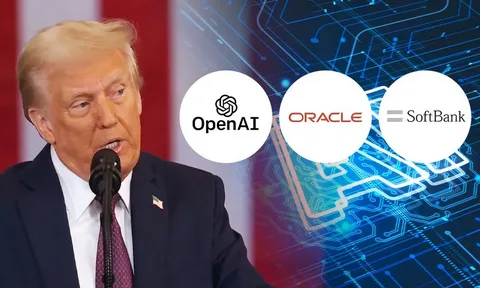
The artificial intelligence industry may be experiencing a major political and economic shift. Recent reports suggest that the Trump administration could explore options for the U.S. government to take an equity stake in OpenAI. While this idea is still largely speculative and would encounter significant legal, political, and regulatory obstacles, the conversation itself emphasizes how vital artificial intelligence has become in national strategy.
In recent years, OpenAI has emerged as one of the leading companies in the global AI race. Its powerful language models, AI tools for businesses, and research projects have transformed artificial intelligence from a niche technology into a major force that is reshaping industries around the world. As AI gains more importance for economic competitiveness and national security, governments are paying more attention to the firms driving its development.
A government ownership stake in a private AI company would mark a significant departure from traditional U.S. technology policy. Typically, the American government has supported innovation through research grants, contracts, tax breaks, and regulations, rather than through direct ownership. However, the strategic relevance of AI is leading to new discussions about how governments should safeguard and support essential technologies.
Supporters believe that artificial intelligence is as crucial as energy, telecommunications, aerospace, and semiconductor manufacturing. They argue that keeping American leadership in AI is vital for economic growth, military strength, cybersecurity, and maintaining technological influence globally.
One reason for the rise in discussions about government involvement is the fierce international competition in AI development. Countries worldwide are pouring billions into AI research, infrastructure, talent training, and advanced computing. Policymakers now see artificial intelligence as a key factor in future geopolitical power.
Advocates argue that a government stake could help ensure that critical AI technologies align with national interests. This involvement might provide extra funding for research, enhance domestic AI infrastructure, and lessen reliance on foreign competitors in key sectors.
At the same time, critics worry about the effects of direct government ownership. Many tech leaders argue that innovation flourishes when companies operate freely without political interference. They fear that government ownership could lead to conflicts over product development, research priorities, business strategies, and competition in the wider technology sector.
Governance and transparency are other major concerns. OpenAI already has a unique organizational structure that balances commercial activities with goals related to AI safety and societal benefit. Adding government ownership could complicate decision-making and accountability.
Financial aspects are also a crucial part of this debate. OpenAI has attracted huge investments from the private sector and is seen as one of the most valuable AI companies globally. Any government move to acquire an ownership stake would likely require substantial financial commitments and thorough regulatory examination.
This discussion is part of a broader trend of governments getting more involved in emerging technologies. Similar debates have arisen around semiconductor manufacturing, advanced computing, quantum technology, and essential infrastructure projects. As technologies grow increasingly significant to national competitiveness, policymakers face tough questions about finding the right balance between market forces and government involvement.
For the AI industry, the implications could be extensive. Government participation in a major AI firm could change investment trends, regulatory approaches, global partnerships, and competitive dynamics. Investors, tech companies, and policymakers would keep a close eye on any developments that indicate a new way of managing crucial technologies.
The idea of government ownership also sparks questions about the future relationship between public institutions and private AI companies. As artificial intelligence integrates into economic systems, healthcare, education, defense, and public services, governments may seek to take a bigger role in the technologies that shape society.
Industry analysts point out that even if an equity stake does not happen, the discussion is significant. It shows how much perceptions of AI have changed. Artificial intelligence is now seen not just as a business opportunity, but as a strategic national asset that affects economic security, technological leadership, and geopolitical competition.
OpenAI’s rapid growth has positioned it at the heart of many of these discussions. The company’s innovations have accelerated AI adoption across various sectors and led governments worldwide to create new policies focused on innovation, regulation, safety, and competitiveness.
Ultimately, whether the U.S. government ever takes a stake in OpenAI is unclear. Many legal, political, and practical challenges must be addressed before such a step could happen. Still, the conversation underscores a vital truth: artificial intelligence has become one of the most strategically important technologies of the 21st century.
As governments, businesses, and researchers continue to navigate the AI revolution, debates over ownership, regulation, and national interests will likely become more frequent. The outcomes of these discussions could shape not only the future of AI companies like OpenAI but also the broader trajectory of technological innovation for many years to come.