

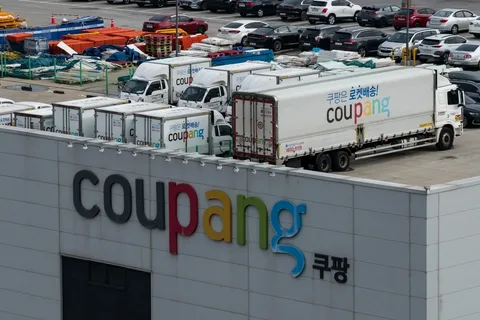
South Korea’s data protection watchdog has handed down the country’s largest-ever privacy penalty. The Personal Information Protection Commission (PIPC) officially slammed New York-listed e-commerce giant Coupang with a record 624.7 billion won (roughly $409 million) fine following an extensive investigation into a catastrophic data leak that compromised the accounts of millions of citizens.
Often referred to as the “Amazon of South Korea,” Coupang dominates nearly 40% of the nation’s logistics network. The unprecedented regulatory action comes after a severe cybersecurity breakdown exposed the sensitive, private information of approximately 37.5 million users—representing more than 70% of South Korea’s entire population.
1. A Failure of Basics, Not a Sophisticated Attack
The regulatory findings paints a damning picture of the e-commerce giant’s internal infrastructure. PIPC Chairwoman Song Kyung-hee was completely unsparing in her assessment of how the system failed, making it clear that this was entirely a management failure rather than a sophisticated external cyberattack.
The government-led investigation revealed the exact sequence of the breach:
- The Inside Source: The primary suspect behind the data theft was a 43-year-old former Coupang software developer who is a Chinese national.
- The Security Lapse: Upon leaving the company, the employee managed to retain a cryptographic authentication signing key and access credentials completely undetected.
- The Remote Access: Utilizing the stolen security key, the suspect maintained unauthorized remote access to Coupang’s overseas servers for roughly a year, quietly pulling vast amounts of user information.
The compromised data included customer names, phone numbers, delivery histories, shipping addresses, and even key codes used to enter secure residential buildings. Fortuitously, financial payment credentials and government-issued ID numbers were not accessed during the year-long infiltration.
2. Breaking Down the Massive $409 Million Financial Penalty
The PIPC structured the historic multi-million dollar penalty into two highly distinct regulatory categories, aiming to punish both the security failure and illegal corporate data practices.
| Fine Breakdown | Amount in Korean Won | Primary Regulatory Violation |
| Data Leak Penalty | 423.6 Billion Won | Failure to maintain basic access controls and delaying breach notification beyond the mandated 72 hours. |
| Illegal Tracking Fine | 201.1 Billion Won | Running a marketing program that unlawfully collected third-party app activity records for 11.1 million users without consent. |
When the breach first came to light, Coupang downplayed the incident, claiming that only 3,000 to 4,500 customer records were compromised. However, the PIPC’s digital forensic audit completely shattered those claims, proving that more than 33 million unique customer profiles had actively leaked out of the company’s compromised databases.
3. High Corporate Fallout and Legal Retaliation
The operational and financial damage hitting the Seattle-headquartered firm stretches far beyond the government fine. Following the initial disclosure of the disaster, Coupang CEO Park Dae-jun resigned in disgrace, forcing Chief Administrative Officer Harold Rogers to take over as interim chief executive.
To mitigate catastrophic public backlash, Coupang announced a massive domestic compensation framework, committing 1.69 trillion won ($1.17 billion) to distribute 50,000 won ($34) platform vouchers to every single affected customer. Driven by these astronomical mitigation expenses, Coupang’s New York-listed shares have plummeted by roughly 32% year-to-date.
While Coupang officially issued a public apology for causing deep concern to its users, the company has refused to accept the regulator’s final ruling and is actively preparing a high-stakes lawsuit to challenge the fine in court, arguing that its proactive security measures were unfairly disregarded.
Furthermore, the aggressive probe has sparked intense trade friction with Washington, with U.S. lawmakers sending a formal letter accusing Seoul of applying anti-competitive, “undue pressure” on an American-listed multinational corporation. South Korea has firmly rejected the political pushback, maintaining that corporate scale does not grant immunity from basic data protection laws.