

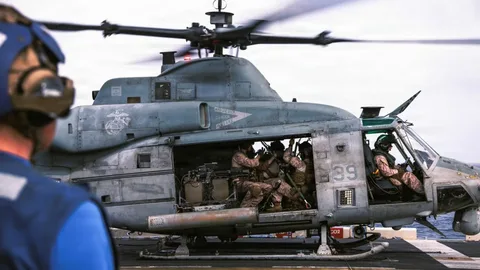
Tensions in the Middle East have surged to a dangerous new high. US President Donald Trump has officially accused Iran of shooting down an American military helicopter over the strategic Strait of Hormuz, forcefully declaring that the United States “must, of necessity, respond to this attack.”
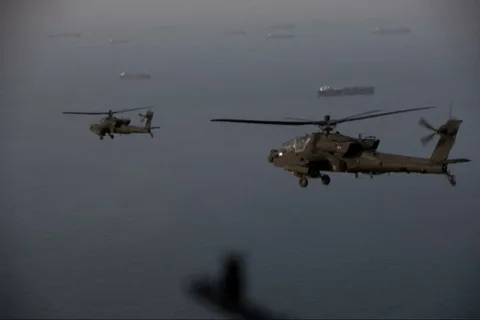
The high-stakes incident involving the sophisticated AH-64 Apache attack helicopter unfolded during a routine patrol mission over the heavily contested waterway. The downing represents the most direct, perilous confrontation between Washington and Tehran since the outbreak of the regional conflict earlier this year.
1. High-Stakes Over-Water Incident and Immediate Fallout
The military aircraft went down at approximately 7:30 p.m. Eastern Time on Monday off the coast of Oman. The downing immediately triggered emergency alerts across regional military headquarters, threatening to completely shatter the fragile, newly restored April 8 regional ceasefire agreement.
While President Trump wasted no time attributing the crash directly to hostile Iranian fire in a fiery post on Truth Social, U.S. Central Command (CENTCOM) has maintained a more cautious public stance. In an official briefing, military spokespersons confirmed the crash but noted that the specific cause of the incident remains under active investigation.
Despite the administrative ambiguity, Trump’s declarative rhetoric leaves virtually no diplomatic wiggle room regarding how the White House plans to handle the crisis moving forward.
2. A First-of-Its-Kind Uncrewed Surface Sea Drone Rescue
While the aircraft itself was completely lost, the mission to recover the flight crew resulted in an unprecedented, historic milestone for modern naval warfare.
- The Drone Deployment: Spending roughly two hours stranded in the volatile waters, the two Army aviators were successfully located and pulled to safety by a 24-foot “Corsair” unmanned surface vessel (USV).
- Task Force 59: The autonomous boat was operated remotely by the US 5th Fleet’s Task Force 59—the Navy’s specialized artificial intelligence and uncrewed maritime security unit.
- The Extraction: Following the automated sea pickup, the uninjured pilots were transferred to a secondary naval location before being safely hoisted into a rescue helicopter.
Military officials confirmed this marks the first time in global military history that an uncrewed sea drone has successfully executed a live search-and-rescue operation to retrieve downed combat troops.
3. The Chokehold on the Strait of Hormuz
The loss of the Apache helicopter highlights the immense, daily dangers facing American forces tasked with enforcing a massive naval blockade against Iranian energy ports.
The ongoing operation, dubbed Operation Epic Fury by the Trump administration, was launched in April to choke off Tehran’s crude oil shipments and force the Islamic Republic back to the negotiating table. The Strait of Hormuz—the vital maritime passage through which nearly a fifth of total global oil production flows—has effectively been rendered a closed combat zone, triggering soaring global energy prices and extreme insurance underwriting risks.
4. Ceasefire Hanging by a Thread
The timing of the downing could not be more volatile. Just 24 hours prior, Trump had successfully applied heavy diplomatic pressure on both Israel and Iran to halt a massive direct weapons exchange following an Israeli strike on a Hezbollah stronghold in Beirut.
Trump had confidently announced that both nations would “leave each other alone for another week” while peace talks mediated by Pakistan progressed. This latest provocation completely upends those delicate dynamics. With the US military having lost at least 42 aircraft and advanced drones since the conflict erupted on February 28, the Trump administration faces immense pressure to execute a definitive counter-strike, threatening to plunge the Middle East back into all-out, unrestricted warfare.