

Tensions in the Middle East have reached a dangerous tipping point yet again. Tehran has publicly accused the United States of lacking the political will to reduce regional instability following a fresh flagrant ceasefire violation in the Gulf. The diplomatic fallout comes immediately after intense military friction involving US strikes on Iranian coastal facilities and naval warning shots fired in the strategic waterways.
Despite a fragile, Pakistan-brokered truce that has been technically active, the conflict has rapidly devolved into a high-stakes “battle of political wills.” Both nations are attempting to outlast each other through localized military actions without triggering a collapse into a full-scale, unmanageable war.
The Latest Flashpoint: Clashes in the Gulf
The latest war of words was ignited by a series of dramatic naval and aerial engagements. According to Iranian state media, the Islamic Revolutionary Guard Corps (IRGC) directed defensive missiles and attack drones toward US warships in the Gulf of Oman. Tehran claimed these were warning shots aimed at preventing American forces from illegally interfering with local shipping networks and confiscating cargo vessels.
In sharp contrast, US Central Command (CENTCOM) characterized its operations as entirely defensive, denying a direct naval clash but confirming that US forces intercepted multiple Iranian attack drones. Furthermore, US forces executed targeted strikes against Iranian radar outposts and coastal installations near Qeshm Island and Sirik.
Following these strikes, Iran’s Foreign Ministry issued a blistering condemnation, stating:
Fragile Ceasefire and Stalled Diplomacy
The timing of this escalation is critical. The regional war—which broke out earlier this year involving the US, Israel, and Iran—had entered a temporary lull under a highly complex ceasefire framework. However, the current situation has left the region suspended in an agonizing state of “neither war nor peace.”
Indirect negotiations hosted by regional mediators have faced immense friction:
- The Nuclear Standoff: Tehran has sharply criticized the International Atomic Energy Agency (IAEA), slamming its recent oversight reports as “political pressure tools” manufactured by Western allies.
- The Hormuz Crisis: The strategic Strait of Hormuz remains a economic chokepoint. While President Donald Trump stated that a peace deal was “largely negotiated,” hardline factions in Iran’s parliament have fiercely resisted reopening the strait, accusing negotiators of trading away Iran’s sovereign assets.
- The Lebanese Front: Although a US-led initiative successfully pushed for a parallel ceasefire along the Lebanon-Israel border, ongoing localized skirmishes between Israeli forces and Hezbollah have repeatedly threatened to rupture the broader truce.
A Nation Suspended
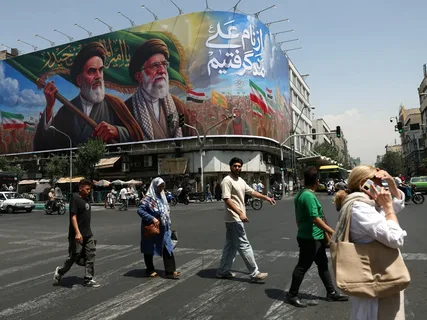
Inside Iran, the domestic impact of this prolonged stalemate is taking a severe toll. The psychological exhaustion of living under the constant threat of renewed airstrikes has deeply impacted everyday life. Amidst skyrocketing inflation and a heavily weakened national currency, citizens in cities like Tehran and Bandar Abbas have flooded local markets to convert their savings into foreign currency and gold.
As both Washington and Tehran manage strict escalation thresholds, international analysts warn that this status quo is unsustainable. Without genuine diplomatic concessions regarding sanctions relief, the unfreezing of overseas assets, and maritime security guarantees, the temporary calm is highly likely to give way to another major wave of conflict.