
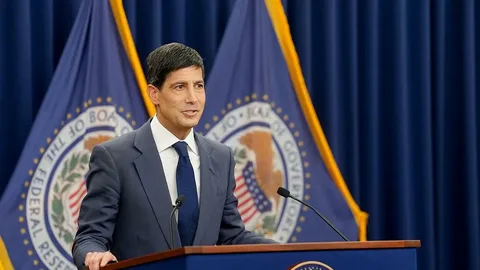
In a highly anticipated policy move, the Federal Reserve has voted unanimously to hold U.S. interest rates steady. Keeping the benchmark federal funds rate fixed within a target range of 3.5% to 3.75%, the decision marked a major milestone as the first official rate-setting session presided over by the newly appointed Fed Chair Kevin Warsh.
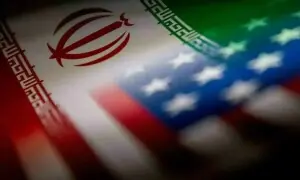
Despite intense public pressure from President Donald Trump for immediate rate cuts to lower borrowing costs, the central bank opted for safety. Policymakers cited a volatile domestic inflation surge and deepening geopolitical uncertainty surrounding the long-term stability of Trump’s newly announced U.S.-Iran peace framework as the primary catalysts for their defensive, wait-and-see approach.
1. The Inflation Fire and Warsh’s Communication Shift
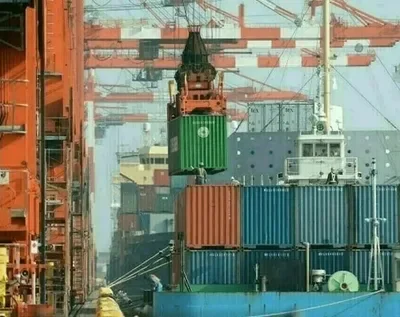
The decision to pause rate adjustments arrives at an incredibly tense macroeconomic juncture. U.S. headline inflation surged past the 4% threshold last month for the first time since 2023, driven largely by intense supply shocks in the global energy sector caused by the 100-day maritime conflict with Iran.
With consumer prices running significantly above the Fed’s mandated 2% price stability target, a rate cut was firmly off the table.
In an aggressive departure from his predecessor Jerome Powell, Chair Warsh implemented a strict “less is more” communication policy. The Federal Open Market Committee (FOMC) dramatically slashed its official post-meeting statement from its typical multi-page text down to a lean, 132-word brief.
The streamlined document eliminated all forward-looking clues regarding future policy adjustments, flatly stating:
2. Tracking the Shift in Economic Forecasts
Alongside the rate freeze, the Fed released its closely watched quarterly economic projections (the dot-plot grid). The updated metrics reveal that the central bank’s leadership has fundamentally pivoted toward a more hawkish, restrictive outlook for the remainder of the year:
| Economic Indicator | Prior March Forecast | New June 2026 Forecast |
| Median Monetary Policy Path | Projected a quarter-point rate cut. | Penciled in one quarter-point rate hike later this year. |
| PCE Inflation Year-End Target | Expected to cool to 2.7%. | Adjusted upward to finish at 3.6%. |
| U.S. GDP Growth Outlook | Projected steady expansion of 2.4%. | Mildly downgraded down to 2.2%. |
The inner consensus of the 18 central bankers who participated in the policy session has fractured completely. Nine officials now anticipate at least one interest rate hike before the end of the year to combat sticky inflation, eight expect rates to remain unchanged, and only a solitary member continues to forecast a cut.
3. The Strait of Hormuz Calculus: Why Relief Arrives Slowly
While the recent breakthrough peace deal to end the naval blockade in the Persian Gulf sent international crude oil tumbling to a three-month low, central bankers emphasize that wholesale market relief will take months to filter down to the real economy.
Clearing underwater naval mines from the vital Strait of Hormuz shipping lanes is projected to take up to seven weeks, meaning global oil distributions cannot normalize overnight. Furthermore, because consumer energy and terrestrial transport overhead were already severely inflated before the conflict, underlying retail prices remain dangerously elevated.
By refusing to lower interest rates prematurely, the Federal Reserve is effectively building a financial firewall. The central bank is waiting to see if Trump’s diplomatic framework translates into genuine, long-term stability at the pump and grocery store before they gamble on making borrowing cheaper for the American public.