

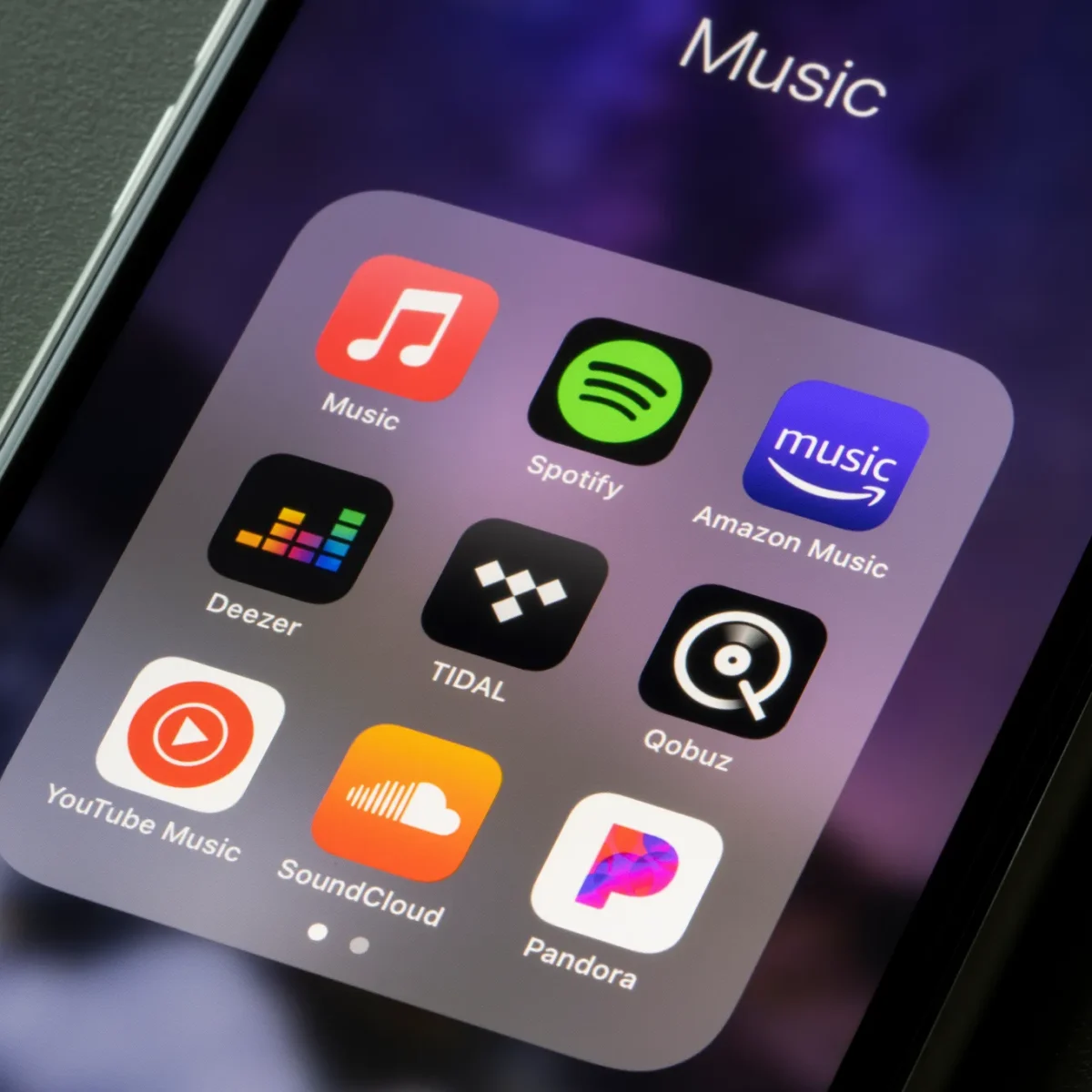
In an aggressive play for transparency amidst the exploding wave of “AI slop,” French music streaming platform Deezer has launched a free online AI music detector.
Available in 27 languages, the tool allows consumers across roughly 20 competing digital streaming platforms (DSPs)—including industry heavyweights Spotify, Apple Music, and YouTube Music—to scan their personal libraries and identify exactly which songs were manufactured by machines rather than humans.
The strategic release marks a massive escalation in the battle for streaming authenticity, with Deezer openly weaponizing its proprietary software to point out how saturated its rivals’ ecosystems have become with synthetic files.
1. The Shocking Scale of “Synthetic Slop”
According to official data released alongside the tool, the music industry is facing an unprecedented inundation of automated content. Deezer revealed that it actively blocks and flags nearly 75,000 fully AI-generated tracks every single day, a staggering metric that accounts for more than 44% of the total daily music delivery hitting the global web.
Throughout the previous calendar year alone, Deezer’s backend systems detected and tagged 13.4 million AI tracks. By opening up their detection engines to analyze competing platforms, Deezer dropped an immediate bombshell regarding their rivals’ catalogs: 43% to 45% of users migrating to Deezer from other streaming networks already have AI music embedded within their existing playlists without knowing it.

2. Unmasking the Billion-Dollar Streaming Fraud
The core motivation behind the public roll-out stretches far beyond simple listener curiosity; it is a direct defensive offensive against systemic monetary fraud.
An internal investigation and data audit conducted by Deezer uncovered a dark reality regarding the behavior of synthetic music online: up to 85% of total streams accumulated by fully AI-generated tracks are completely fraudulent.
Organized bad actors are utilizing advanced AI creation software like Suno and Udio to instantaneously generate hundreds of thousands of generic instrumental tracks. They then deploy massive automated botnets and stream farms to artificially play these synthetic songs on repeat.
This mechanical manipulation siphons hundreds of millions of dollars out of the global royalty pool—cash that is directly stolen from the pockets of hard-working, flesh-and-blood human musicians.
3. How the Scanner Works and Why Competitors Stand Alone
The tool works as a seamless, browser-based digital audit. Users navigate to Deezer’s official detector portal, select their primary streaming provider, and securely authenticate their account. The system quickly scans the audio signals of the user’s playlists, cross-referencing files against unique digital signatures and artifact anomalies with a claimed 99.8% precision accuracy.
While Spotify recently announced “Verified” profile badges to mitigate transparency concerns, the market leader still relies entirely on individual creators to voluntarily self-disclose machine assistance in their metadata credits.
By taking the lead, Deezer is attempting to establish a firm moral high ground. While competitors continue to monetize and host unlabelled synthetic files, Deezer completely purges detected AI songs from all algorithmic recommendations and editorial playlists, ensuring that human creativity remains protected at all costs.