

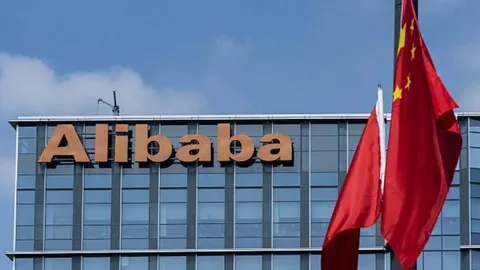
In a massive escalation of the ongoing trade and technological Cold War, the U.S. Department of Defense (DoD) has officially expanded its national security blacklist. The updated index now formally designates e-commerce titan Alibaba, search and artificial intelligence pioneer Baidu, and electric vehicle giant BYD as “Chinese military companies.”
The highly controversial move expands the Pentagon’s comprehensive 1260H list to a record 188 entities, dealing a severe reputational blow to Beijing’s most prominent commercial champions. The sudden blacklisting arrives less than a month after a high-stakes summit in Beijing between U.S. President Donald Trump and Chinese President Xi Jinping, completely shattering any immediate hopes for a technological truce.
1. Targeting the “Military-Civil Fusion” Strategy
The legal framework empowering the Pentagon stems from a congressional mandate requiring the annual identification of entities operating inside the U.S. that directly or indirectly aid the People’s Liberation Army (PLA).
By blacklisting consumer-focused giants like Alibaba, Baidu, and BYD, Washington is actively targeting Beijing’s aggressive military-civil fusion strategy—a state policy that forces private, commercial tech enterprises to share advanced research, infrastructure, and breakthroughs with the nation’s defense apparatus.
The Pentagon justified the specific listings by pointing to the companies’ deep institutional ties:
- The Regulatory Link: All three corporations maintain deep strategic affiliations with China’s Ministry of Industry and Information Technology (MIIT), the state agency overseeing domestic technological and industrial modernization blueprints.
- The Cloud and AI Threat: Alibaba’s vast cloud computing architecture and Baidu’s advanced autonomous vehicle and AI frameworks are viewed by U.S. intelligence as critical foundation blocks that can be easily repurposed to boost state cyber and logistical military operations.
- The Hardware Dominance: BYD, which recently overtook Tesla as the world’s largest electric vehicle maker, was blacklisted alongside rival EV maker Nio and major lithium battery suppliers like EVE Energy, exposing the entire clean-energy supply chain to immense U.S. regulatory scrutiny.
2. Immediate Commercial and Contracting Fallout
While inclusion on the 1260H list does not trigger immediate, blanket economic sanctions or a total ban on retail trade, its practical legal consequences are severe and immediate:
- The Contract Ban: Under existing federal law, the Pentagon is completely prohibited from entering into or renewing direct procurement contracts with any blacklisted entity starting June 30, 2026.
- The Supply Chain Chokehold: By 2027, the restrictions will expand aggressively, legally barring the U.S. military from buying any products or software services that utilize components from these listed companies via third-party vendors.
- The Political Pressure: Following the release of the updated index, the House Select Committee on the Chinese Communist Party issued a fierce warning to Wall Street, declaring that any designated firms currently trading on U.S. exchanges should be immediately delisted, urging American corporations to completely purge these entities from their commercial supply networks.
3. Sharp Counter-Attacks and Legal Warfare
The fallout across international boardrooms was immediate, with affected firms vehemently rejecting the Pentagon’s claims.
Alibaba released an uncompromising statement asserting there is absolutely “no basis” for its inclusion, flatly denying it is a part of any military-civil fusion network. Baidu slammed the military designation as “entirely baseless,” promising to exhaust all administrative options to overturn the ruling.
Most aggressively, BYD’s top international executive, Stella Li, issued a sharp public warning from an automotive conference in London, stating that “BYD is not a company that can be pushed around” and confirming the automotive giant will deploy its full “legal weapons” in American courts to aggressively protect its corporate rights.
Meanwhile, the Chinese Embassy in Washington accused the U.S. of vastly “overstretching the concept of national security” to implement purely protectionist, discriminatory trade barriers. With tech stocks slipping across New York trading desks, the blacklisting underscores a stark global reality: even as world leaders negotiate diplomatic stability, the underlying war for global technological dominance is accelerating at full throttle.